Introduction
Hey fellow tech enthusiasts! I’ve been thinking about something that gets both the artist and coder sides of my brain firing at the same time. Today, we’re exploring how Artificial Intelligence and the arts are colliding in ways I honestly didn’t see coming five years ago. Picture algorithms writing symphonies that actually make you feel something, AI helping writers push past that awful blank-page paralysis, and digital art that goes way beyond fancy filters.
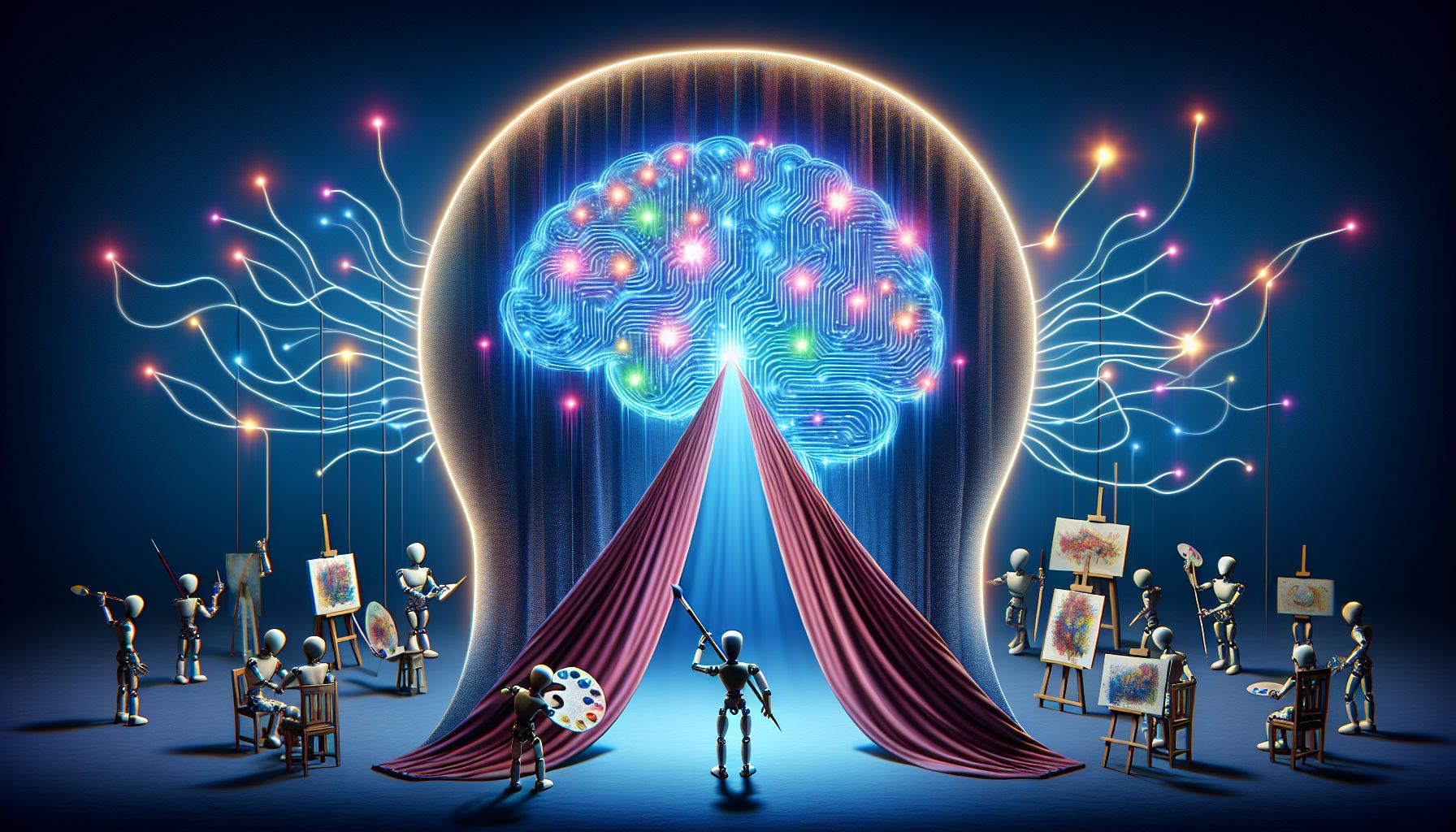
Here’s what I find fascinating: Creative AI isn’t about replacing human creativity. It’s more like getting a new set of power tools for your workshop. Sure, some people see AI entering creative spaces as this existential threat to “real” art. But I’m in the camp that sees this human-machine collaboration as pretty damn exciting. Come along as I walk through what AI is actually doing in creative fields right now.
The Dawn of a New Creative Frontier
AI in the Art World
Artists have always been shaped by their tools. Cave painters had pigments and stone walls. Renaissance masters had oil paints and canvas. Now we’ve got artificial intelligence in the mix, and it’s changing how we think about making art entirely. Technologies like Generative Adversarial Networks (GANs) and Convolutional Neural Networks (CNNs) can now produce images that genuinely move people. You probably heard about “Edmond de Belamy,” that AI-generated portrait that sold at Christie’s for almost half a million? That was just the start.
These days, platforms like DeepArt and RunwayML let pretty much anyone experiment with AI art generation. But here’s the thing: artists aren’t being replaced. They’re getting a completely new set of brushes to work with. AI-generated art becomes this back-and-forth between creator and machine. The AI might analyze current color trends and suggest palettes, or take your rough sketch and blend it with classical painting styles. It’s making art more accessible while expanding what human imagination can actually achieve.
Writers and Wordsmith AI
Writer’s block is the absolute worst. You sit there staring at a cursor that seems to mock your creative ambitions. AI writing tools like OpenAI’s GPT models are changing that experience completely. As someone who writes regularly, it’s like having a brainstorming partner who never gets tired or judgmental. Those passive-aggressive blank pages? They’re becoming a thing of the past.
These AI systems can generate poems, scripts, articles, whatever you need to get your creative juices flowing. The AI becomes less like competition and more like a writing buddy who helps you work through ideas, clean up prose, or punch up dialogue. And for people writing in their second or third language, AI-powered editing tools are making it possible to communicate with global audiences without grammar getting in the way. Critics worry about originality, and I get that. But think of AI as a creativity amplifier rather than a creativity replacement. It handles the tedious stuff so you can focus on the storytelling that actually matters.
Composing the Future: AI in Music
Music hits different because it’s so deeply emotional and personal. But AI is finding its way into harmonies and rhythms too, and the results are genuinely interesting. Programs like AIVA and Amper Music let musicians collaborate with what are basically silicon bandmates. These systems analyze thousands of hours of existing music to generate original compositions. But it goes beyond just melody creation. AI can spot musical trends and suggest new directions, or even create personalized soundtracks based on individual listening habits and moods.
We’re not talking about robot musicians taking over concert halls. Instead, AI is expanding what’s musically possible and filling creative niches that might never have been explored otherwise. The accessibility factor is huge here too. Budding musicians can experiment and compose without needing expensive equipment or years of formal training. AI doesn’t replace the human spirit in music. It just gives that spirit some new instruments to play with.
The Aesthetic Alchemy: Blending Technology with Tradition
Art has always been our emotional mirror. It reflects who we are and what we’re feeling as a society. AI’s entry into creative spaces isn’t making traditional art obsolete. It’s redefining what creativity can look like when human intuition meets machine capability. This combination is creating some genuinely transformative possibilities.
Crafting Unique Experiences
AI is letting creators offer audiences experiences that adapt in real-time. Take immersive theater, where AI can shift narratives based on audience choices, creating something personal for each viewer. Imagine performances where audience members wear AR headsets that respond to their emotional state, adjusting imagery and atmosphere accordingly. The story and environment can change based on how people are actually reacting, pulling them deeper into alternative realities.
In our digital world, hyper-personalized content is becoming standard. Artists can now accommodate individual preferences at scales that were impossible before, creating art that resonates on a deeply personal level. Instead of passive, one-size-fits-all experiences, we’re getting dynamic, responsive stories. Art becomes a conversation rather than a lecture.
A New Renaissance for Creativity
I’m probably being optimistic here, but this feels like we’re entering a new Renaissance. An era where creative energy that used to get burned up on technical barriers can be redirected toward pure innovation. Each brushstroke, word choice, or musical note guided by AI tools adds up to something bigger. Ideas that seemed too resource-intensive or technically challenging are becoming achievable.
AI is like having an apprentice, an idea generator, and an efficient assistant all rolled into one. It’s democratizing creativity by lowering the expertise barriers, while simultaneously pushing the boundaries of what seemed traditionally possible. Not everyone’s going to love this shift, but the creative possibilities are pretty exciting.
Conclusion
The whole AI-in-art conversation generates plenty of debate, but to me it shows how adaptable and inventive humans really are. What we’re seeing isn’t artificial at all. It’s deeply human, coming from our basic drive to evolve, create, and express ourselves in new ways.
The art world isn’t turning into some homogenized machine-content wasteland. It’s actually becoming more inclusive and expressive. Our digital collaborators are giving us new raw material to work with, pushing us to think differently, blend genres we never would have mixed before, and explore creative territory that didn’t exist five years ago. The heart of creativity, that essentially human drive to make something meaningful, remains unchanged. AI can take the wheel sometimes, but we’re always riding shotgun on this creative journey.
Now it’s your turn. Whether you’re picking up a brush, pen, or keyboard, try thinking of AI as a creative partner rather than a threat. We’re redefining what art can be in the age of artificial intelligence, and honestly, I can’t wait to see what gets created next. Keep making stuff, keep experimenting, and keep turning your ideas into reality.
