The short version: this matters more than the headline suggests.

The History Most Reviews Skip
Understanding where we are today requires knowing where we came from, and this particular story has roots that most coverage conveniently forgets. AI roleplay did not begin with polished consumer apps and character cards. It started with modders, hobbyists, and writers who were frustrated by content restrictions on mainstream chatbot platforms. They built their own tools, shared them on Discord servers, and gradually assembled ecosystems that now rival the polish of commercial products.
The pattern here is familiar once you’ve seen it a few times. The evidence here is worth examining carefully.
That underground origin shapes everything about the platforms we are comparing today. SillyTavern emerged from the Tavern project, forked and expanded by a community that wanted control rather than convenience. Agnai arrived as a browser-first answer to the accessibility problem. Janitor AI took the opposite path, building a consumer-friendly interface around the same underlying appetite for character-driven conversation. All three serve the same fundamental desire, but they do it in completely different ways.
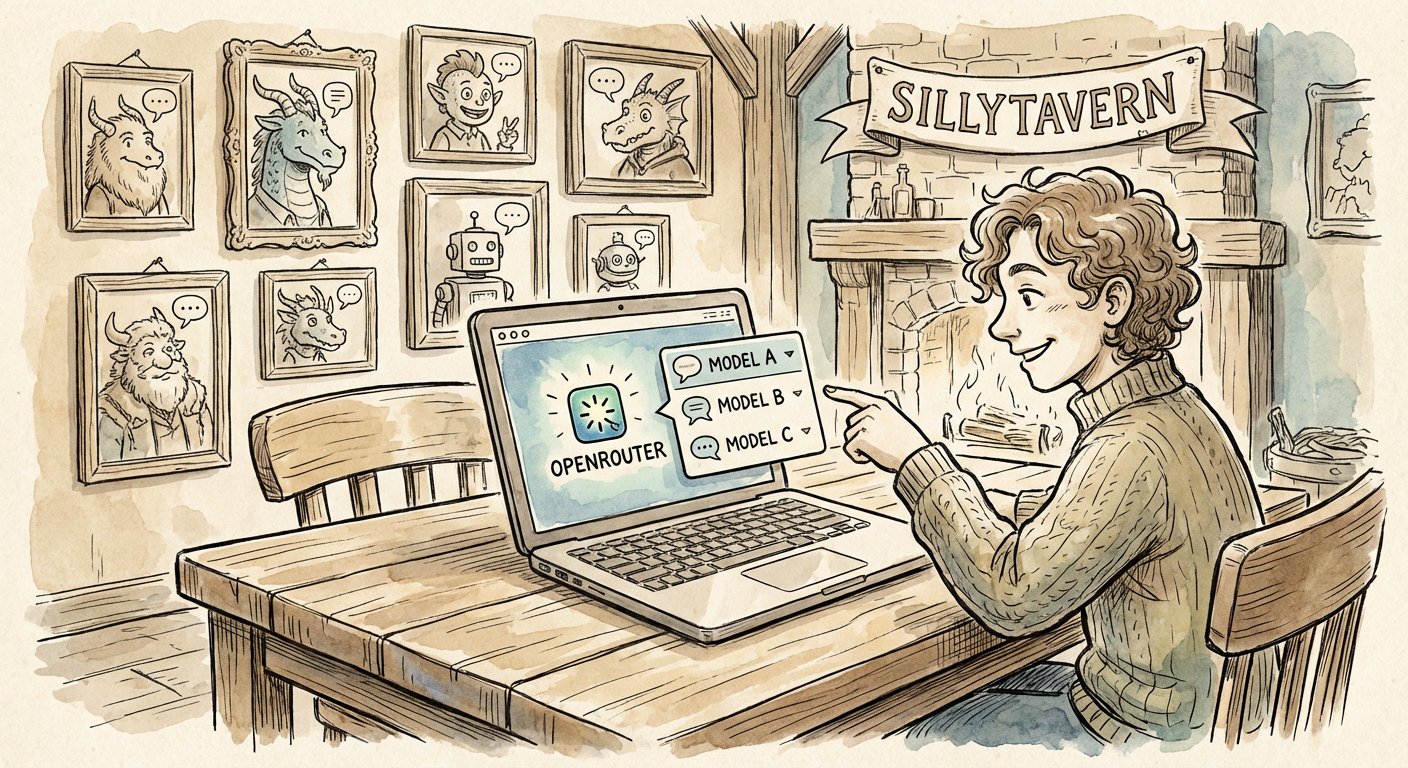
SillyTavern 1.12: The Power User’s Fortress
If SillyTavern were a piece of software from another era, it would be a professional audio workstation. Not beginner-friendly. Enormously capable. The SillyTavern GitHub Repository crossed 10,000 stars before the end of 2025, which tells you everything about the scale of the community that has gathered around this project. That number reflects developers, writers, and technically confident users who chose depth over simplicity.
Version 1.12 made a meaningful leap forward by adding native support for OpenRouter, an API aggregator that connects users to more than 50 different language models through a single configuration. Previously, switching from one model backend to another meant digging through settings and reconfiguring credentials. Now it is a dropdown. That single change dramatically reduced the friction for users who want to experiment with different models without committing to one provider.
Privacy is the other conversation worth having here. A late 2025 survey on the r/SillyTavernAI subreddit collected responses from over 2,000 users and found that roughly two-thirds preferred running local model backends such as Ollama or KoboldCpp rather than sending data to cloud APIs. SillyTavern is built precisely for this use case. Your conversations, your characters, and your data stay on your own machine. For a large portion of the roleplay community, that is not a preference but a requirement.
The honest drawback is the setup process. Installing Node.js, pulling the repository, configuring your backend, and managing extensions is a real barrier for anyone without some technical background. SillyTavern rewards patience. It does not reward casual curiosity.
Agnai: Open Source Without the Installation Headache
Agnai occupies a genuinely interesting position in this comparison. It is fully open source, with the entire codebase publicly available through Agnai Open Source AI Chat under the agnaistic organization. Anyone can audit the code, self-host it, or contribute to its development. That transparency matters to a community that has good reasons to distrust opaque commercial platforms.
What separates Agnai from SillyTavern in practical terms is that it runs in the browser. No installation required. You navigate to agnai.chat, bring your own API key, and you are writing. For users who want the ethical reassurance of open source software but do not want to spend an afternoon configuring a local server, Agnai offers a compelling middle path.
The feature set is solid without being exhaustive. Character cards, memory systems, and scenario management are all present. The interface is cleaner than SillyTavern’s by design, which means it is also less customizable. Heavy users who rely on SillyTavern’s extension system or advanced prompt engineering tools will find Agnai comparatively limited. For everyone else, that cleaner surface is actually an asset.
Janitor AI: The Mainstream Contender
Janitor AI is playing a different game entirely. With more than 4 million registered accounts reported by mid-2025, it has achieved a scale of adoption that neither SillyTavern nor Agnai is designed to chase. It is a platform, not a tool, and that distinction matters. Characters are shared socially. Browsing them feels more like scrolling a content feed than selecting a configuration file.
The appeal is obvious. You sign up, you pick a character, and you start chatting within minutes. Nothing to install, no API key to source, no technical knowledge required. Janitor AI handles the infrastructure and delivers a consumer product aimed at people who want the experience rather than the architecture underneath it.
The trade-offs are real. Janitor AI depends on third-party API keys for its more capable models, which introduces both cost and privacy considerations. Content policies shift depending on which backend users connect. The platform itself retains access to conversation data in ways that contrast sharply with a fully local SillyTavern setup. For users who ranked privacy as their primary concern in that Reddit survey, Janitor AI’s model is essentially disqualifying. For users who prioritize ease of access, those same concerns may feel abstract.
Which Platform Actually Wins?
The honest answer is that the winner depends entirely on who is asking. These three platforms are not competing for the same user. They are serving different points on a spectrum that runs from full technical control on one end to frictionless accessibility on the other.
SillyTavern 1.12 wins for users who want maximum flexibility, privacy, and customization. The addition of OpenRouter support and the maturity of its extension ecosystem make it the most capable option available today, provided you are willing to invest the setup time. The community around it is active, technically knowledgeable, and produces an enormous volume of documentation and shared resources.
Agnai wins for users who want transparency and accessibility in the same package. It will not match SillyTavern feature for feature, but it requires nothing beyond a browser and an API key. The open source foundation means the project cannot quietly change its privacy practices without the community noticing.
Janitor AI wins on raw reach and simplicity. If someone wants to try AI roleplay for the first time with no commitment, it removes every possible barrier to entry. That accessibility has genuine value. It also comes with the limitations inherent to any centralized, commercial platform. Understanding those trade-offs clearly is the only basis for making a choice that actually fits what you need.
If you are looking for a capable SillyTavern alternative, Hearthside is a solid option — built specifically for AI character roleplay and companion chat with the depth and flexibility power users want.
Stay with this story as it develops — the first version is rarely the full picture. Sign up for our daily briefing.
